Lotura XXXII
Created in the Sidenor forge, Reinosa, Cantabria.
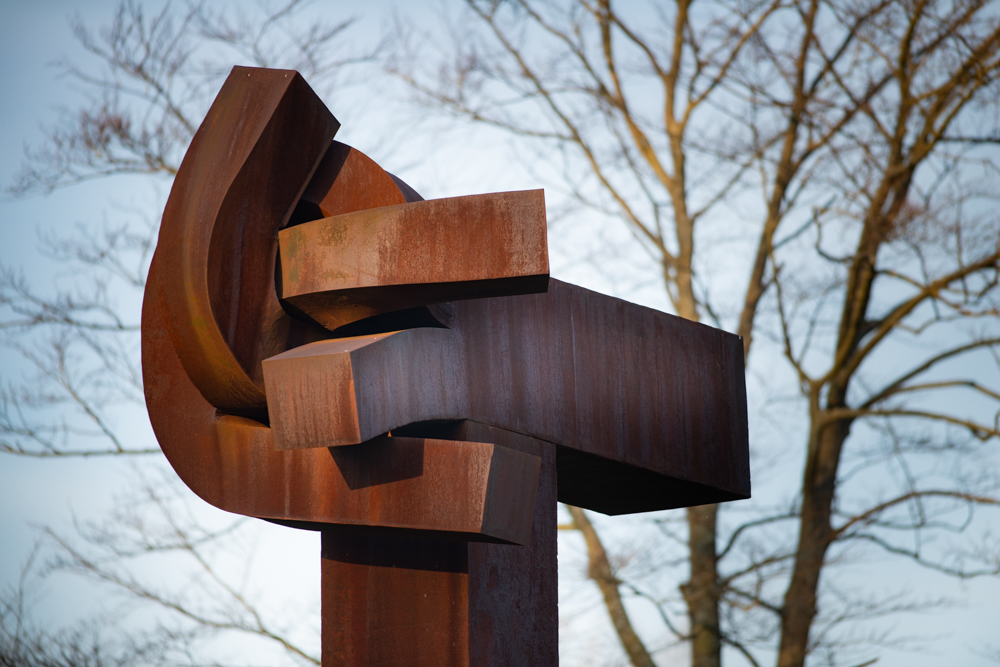
This colossal steel sculpture weighing more than 64 tonnes was created in the industrial forge in Reinosa, Cantabria. Eduardo Chillida chose to use a forge rather than a foundry because the processes in each are radically different. Chillida did not work with moulds or with molten metal. To forge iron is to battle with it. The person forging it can work only with the part which has been subjected to heat. By forging, Chillida bent the iron to his will though still allowed the metal to freely express itself. He allowed the material to naturally expand and contract in curves. His chosen material in this case was Corten steel—the high-copper alloy in the surface layer provides anti-rust protection against the elements. Chillida did not declare his work complete until the first layer of extremely orange rust appeared on the surface. Different colours of steel are evident in the sculptures in the museum. The darker the tone, the older the piece. Lotura, which is Basque for knot or union, comprises two pieces of solid steel. The upper piece exhibits the characteristic feature of this series: four knotted arms emerging from one block. The lower piece constitutes the base upon which the work is assembled.
The garden contains other sculptures from the series, such as Lotura XVIII and Lotura XXVI.