Lo profundo es el aire XVII
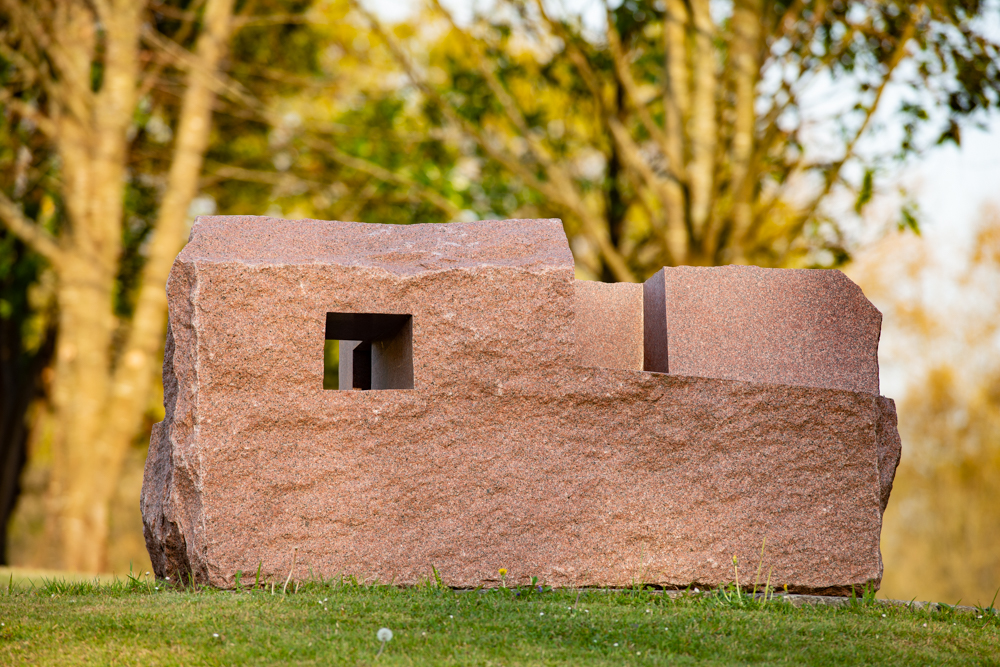
The title of the work comes from a verse by Jorge Guillén, a poet from Valladolid and member of the Generation of ‘27. The two creators met in Harvard in 1971 and struck up a friendship. Years later, when Chillida wanted to pay tribute to Guillén, he found this verse: “Más allá, lo profundo es el aire” (Beyond, how profound is the air). It was the link between the two artists. This series is a tribute to the poet: “When I paid homage to Jorge Guillén, I first re-read his entire work to try to find a concept through which we could both be on the same page. I found it in Cántico. One part says “Lo profundo es el aire”, which for me is a perfect concept.”
All sculptures in the series were an exploration for his unrealised project on Tindaya mountain on Fuerteventura. His starting point was an initial sculpture in alabaster called Mendi Huts (1984), which means ‘empty mountain’: “Years ago I had a vision which I sincerely believed was utopian. It was to create a space within a mountain for men of all races and colours, a great sculpture of tolerance. One day the opportunity arose to create the sculpture on Tindaya, Fuerteventura. This was the mountain were utopia could be reality. The sculpture would help protect the sacred mountain. The large space created within would not be visible from outside, but the men who penetrated its heart would see the light of the Sun, of the Moon, inside a mountain leaning towards the sea, and towards the horizon, unreachable, necessary, non-existent...”
The museum houses other sculptures from the same series: Lo profundo es el aire IV, Lo profundo es el aire, Estela XII (Stela XII), Lo profundo es el aire XIV and Lo profundo es el aire XVIII.